

What is Fukamushi-Sencha?
Every sencha is steamed soon after picking, to stop the leaf oxidising. Fukamushi simply steams it for two to three times as long. That one change alters everything downstream.
The method was born on the Makinohara plateau in Shizuoka. Tea grown there sat in long hours of sun, which made the leaves thick and hard and left the finished tea harsh and grassy. Steaming longer broke that toughness down, softened the bitterness, and turned a difficult tea into a mellow one. The maker who pioneered it accepted that his leaf would look worse for it, on the reasoning that tea is judged in the cup and not in the packet.
He was right about the trade. Long steaming makes the leaf fragile, so it breaks into finer pieces that never fully settle. Pour a fukamushi and the cup is dense and opaque rather than clear, closer to jade than to gold. Those fine particles carry flavour that a whole leaf keeps to itself, which is why the tea tastes thicker on the tongue.
It also means the tea gives itself up quickly. Fukamushi needs a shorter steep than you would give an ordinary sencha, around thirty to sixty seconds in water cooled to about seventy degrees. Any longer is not a disaster, since there is little astringency to draw out, but shorter is where the sweetness sits.
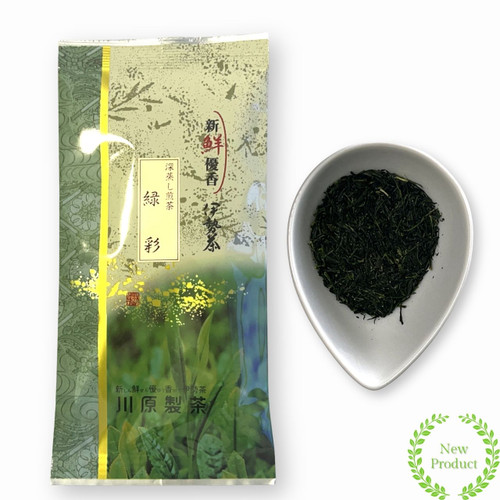
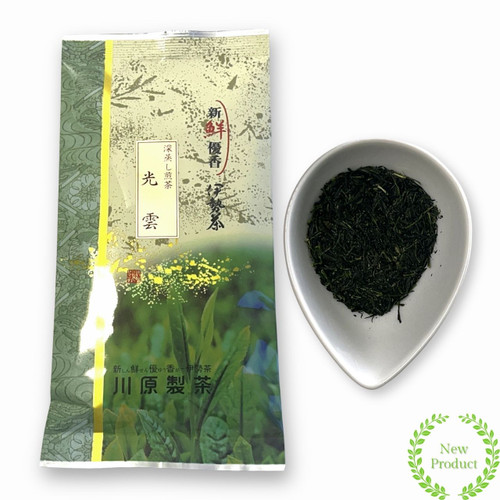
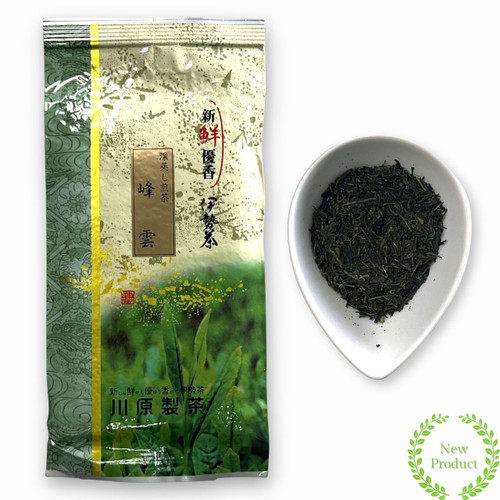
Our fukamushi comes from Kawahara Seicha in Ise, who have been making tea since 1883. Ryoku-sai is the daily cup and their best seller, Kou-un brings a toasted, brisk edge from a high heat roast, and Hou-un is the mellow one at the top of the range.
Fukamushi-Gyokuro: Two methods that rarely meet
Gyokuro is shaded from the sun for weeks before picking. Starved of light, the leaf holds on to its amino acids and makes fewer of the compounds that turn a tea bitter, which is where its deep sweetness comes from. That leaf is delicate, so it is almost always steamed lightly to keep its nuance intact.
Deep steaming does the opposite. It steams two to three times longer, breaking the leaf down for a thicker, cloudier, rounder cup. Applied to gyokuro it should be overkill, and most makers will not attempt it.
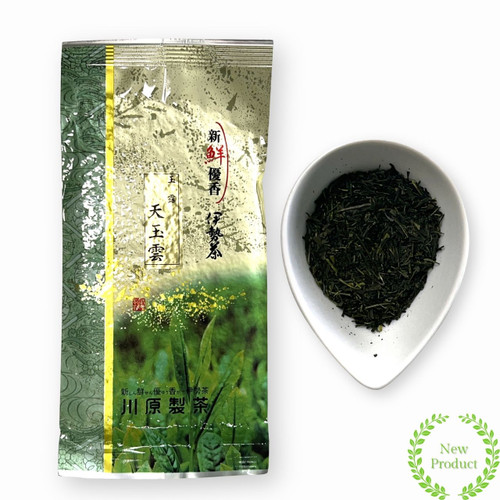
Kawahara Seicha does. The result keeps gyokuro's sweetness and low astringency but adds a body that shade grown tea does not usually carry. Seigyoku-un is the gentler of the two and the easier place to start. Tengyoku-un is the highest grade they make.
Brew either one cool and slow: three to five grams per person, water cooled to around fifty to sixty degrees, only about forty millilitres each, and a steep of two minutes or more. Drain to the last drop, then raise the temperature slightly and shorten the second steep to about a minute.
Store Manager Recommends
Fukamushi Sencha Hou-un by Kawahara Seicha
This is the one I reach for when I want to sit down properly with a cup. Hou-un is the top of Kawahara's deep steamed range and it shows in how round everything tastes: no edge, no sharpness, just a thick green sweetness that keeps going long after you swallow. The name means the cloud that gathers over a summer peak, and the cup comes out looking exactly like that. Give it seventy degrees and a short steep, and do not leave the last drop in the pot.
Gyokuro (Fukamushi) Tengyoku-un by Kawahara Seicha
Gyokuro almost never gets deep steamed. The leaf is delicate and most makers will not risk it, which is why I did not expect this one to work at all. It does. All the shade grown sweetness you want from a gyokuro is there, but with a body and a thickness that ordinary gyokuro simply does not have. If you already know gyokuro, this is the one that will surprise you.
Fukamushi Sencha | Order Online, Ship from Singapore